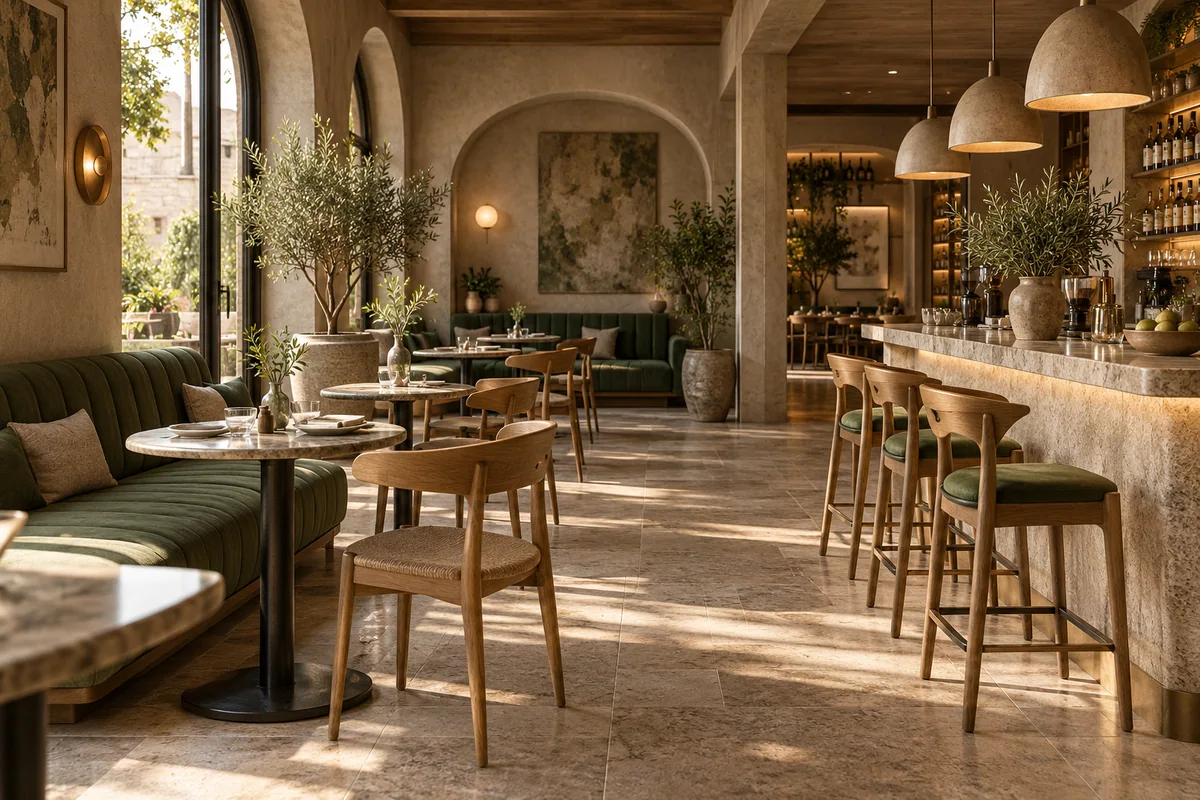
How Colour Shapes an Interior
Take a colour palette out of the catalogue and into the room’s actual light, alongside fabric, timber and wall samples.

The design perspective
A colour can appear different as neighbouring surfaces and lighting change. Assess wall paint, chair upholstery and the table finish together rather than selecting each in isolation. A quiet, light base can make a stronger accent easier to read, but it is one option rather than a requirement. Dark palettes can also create a legible, welcoming setting. The important connection is between the palette and the way the space will be used.
In everyday use
When choosing green upholstery for a café, look at the warmth of its timber, the sheen of nearby metal and the evening lighting. At home, consider the colours seen through an open doorway. Avoid assuming that a shade produces the same emotion in everyone; use real samples and feedback from the people who will use the room. Testing a small area for several days can lead to a more informed decision than recolouring the entire interior at once.